



QUÉ SABEMOS DE… 2026
For the tenth consecutive year, the CFM, in collaboration with the Gipuzkoa Photographic Society, is presenting the ‘What Do We Know About…’ series in Donostia / San Sebastián. This unique series of public outreach talks, organised by the Spanish National Research Council (CSIC), is inspired by humanity’s innate curiosity and features professionals from the worlds of science and science communication.
This year’s programme features four sessions exploring cutting-edge science that is shaping the present to transform the future. Furthermore, the talks will be accompanied by questions from the audience to foster dialogue between science and society.
FREE ADMISSION UNTIL FULL CAPACITY IS REACHED
ALL THE PRESENTATIONS WILL BE IN SPANISH

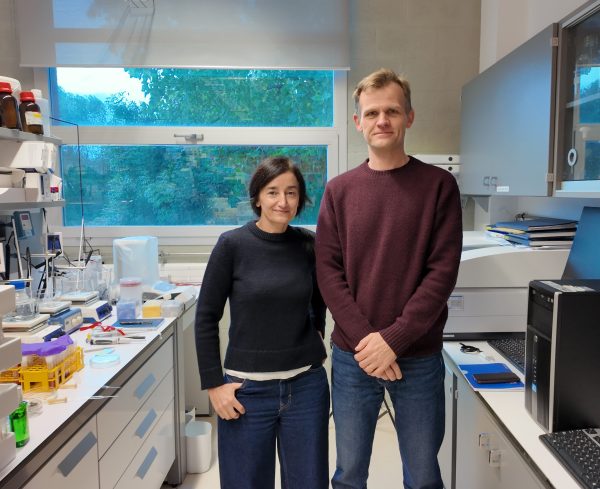
Cuando el oro ilumina las neuronas
Ana Sánchez Iglesia eta Marek Grzelczak
Researchers at the CFM (CSIC-EHU)
November 12
18:30
Location: CFM Auditorium
How can particles thousands of times smaller than the thickness of a hair help us study the brain? In this talk, we’ll explore how nanotechnology is opening up new possibilities in neuroscience. We’ll discover what gold nanoparticles are, why they interact with light in such a unique way, and how they can be used to wirelessly modulate neuronal activity. Through real-world examples developed in the Basque Country, we’ll see how new neurotechnologies are being advanced—technologies with the potential to help us better understand the brain and develop future therapies for neurological injuries and diseases.
Ana Sánchez Iglesias and Marek Grzelckzak
Marek Grzelckzak entró a formar parte del CSIC en el año 2020 como CT y promocionó recientemente a profesor de investigación. Es químico de formación y se ha especializado en la fabricación de nanosistemas coloidales dinámicos con propiedades controladas de captación de luz y con aplicaciones en los sectores de la salud y la energía. Ana Sánchez Iglesias es investigadora en el Centro de Física de Materiales.
 Física cuántica sin gato encerrado
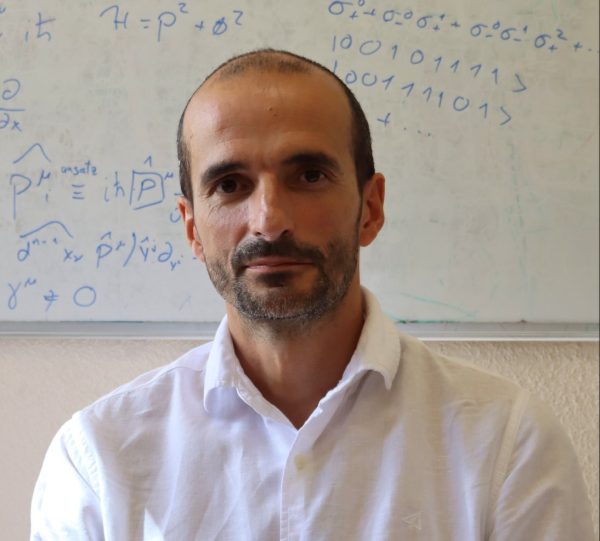 Física cuántica sin gato encerrado
Carlos Sabín Lestayo
Profesor in the Department of Theoretical Physics at the Autonomous University of Madrid
November 19
18:30
Location: Sociedad Fotográfica de Gipuzkoa
It’s high time we treated quantum physics like any other branch of knowledge and presented it to the public with rigor and honesty, without trying to sound clever and without resorting to analogies that confuse more than they help. In other words, no hidden agenda.
In this talk, we’ll try to provide a realistic overview of what quantum physics is and what its applications are, while avoiding common clichés and myths.
Carlos Sabín Lestayo
Full professor in the Department of Theoretical Physics at the Autonomous University of Madrid. Researcher in the field of quantum science and technology. Author of three popular science books. Latest book: “Why Can’t We Travel Back in Time?” (Catarata).
 ¿Qué sabemos de las encuestas de opinión? Qué nos dicen (y qué no) ante las elecciones generales del 29N
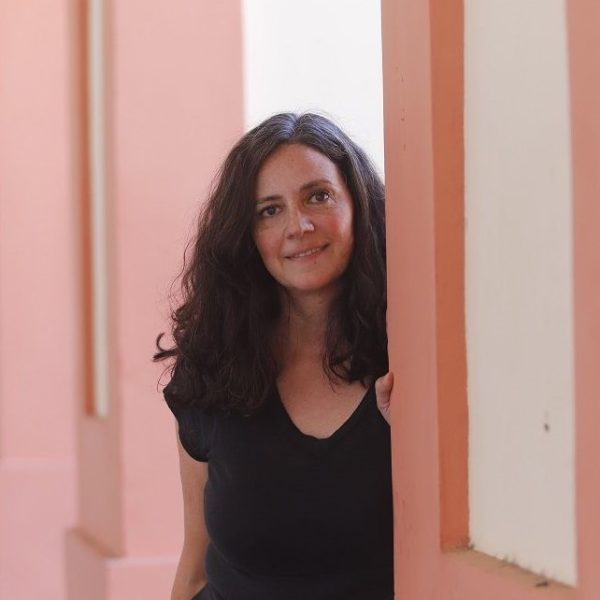 ¿Qué sabemos de las encuestas de opinión? Qué nos dicen (y qué no) ante las elecciones generales del 29N
Sara Pasadas del Amo
Professor of Sociology at the University of Córdoba
November 26
18:30
Location: Sociedad Fotográfica de Gipuzkoa
Polls are part of our daily lives and take on special significance during election campaigns. But what exactly is a poll? How have we come to use them to gauge public opinion and predict voting behavior? This talk offers an overview of their origins and evolution, explaining how they are conducted and what their main sources of error are. With just three days to go before the general election on November 29, we will use the pre-election polls published during the campaign as a case study to understand what they can tell us—and also what they cannot tell us—about the election.
Sara Pasadas del Amo
Sara Pasadas del Amo is a professor of sociology at the University of Córdoba and holds a Ph.D. in sociology from the Public University of Navarra. Her research focuses on survey methodology, particularly data quality, survey administration methods, and electoral surveys, as well as political participation. She has spent much of her research career at the Institute for Advanced Social Studies (IESA-CSIC) and is the author of several publications on survey methodology.
 ¿Qué sabemos de… Astrobiología?
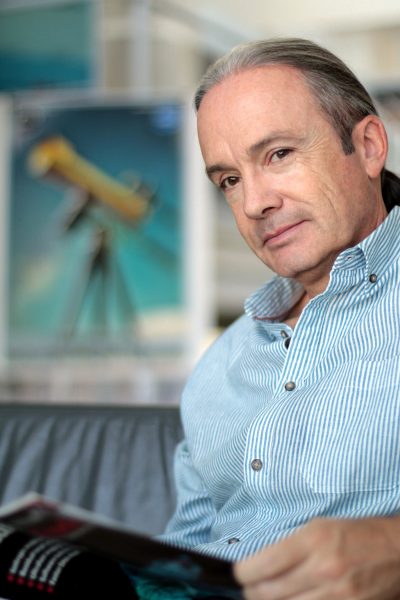 ¿Qué sabemos de… Astrobiología?
Carlos Briones Llorente
CSIC researcher at the Center for Astrobiology (CSIC-INTA) and science communicator
December 3
18:30
Location: Sociedad Fotográfica de Gipuzkoa
Astrobiology offers interdisciplinary approaches to some of the most pressing questions in modern science: How did life originate on Earth? How has it evolved and adapted to the most extreme environments? Could the transition from chemistry to biology have occurred on other planets or moons, within or outside the Solar System? How and where do we search for potential extraterrestrial life? Could there be other intelligent, technologically advanced beings capable of communicating with us? In this talk, we’ll try to answer some of these big questions… and we’ll undoubtedly raise many more.
Carlos Briones Llorente
Carlos Briones, who holds a Ph.D. in Chemical Sciences, is a Research Scientist at the CSIC’s Center for Astrobiology (CSIC-INTA, affiliated with the NASA Astrobiology Program). He leads a group that investigates the origin and early evolution of life, as well as the development of biosensors with applications in astrobiology and biotechnology. He has extensive experience in science communication as a lecturer, author, and contributor to the press, for which he has received numerous awards.
 Geotermia: la energía renovable que nos regala el planeta Tierra
 Geotermia: la energía renovable que nos regala el planeta Tierra
Cristina de Santiago Buey
Researcher at the Geological and Mining Institute of Spain (IGME-CSIC)
December 11
17:30
Location: Sociedad Fotográfica de Gipuzkoa
In a world that needs to move beyond fossil fuels, geothermal energy emerges as a silent, clean, and constant ally. This energy, which comes from the Earth’s internal heat, is renewable, available 24 hours a day, 365 days a year, and—in its shallow form—can be harnessed almost anywhere to heat and cool our homes and buildings. In this lecture, we will explore—in an engaging and educational way—where that heat comes from, how it is harnessed, what makes it unique compared to other renewables, and why it will be key to our planet’s energy transition.
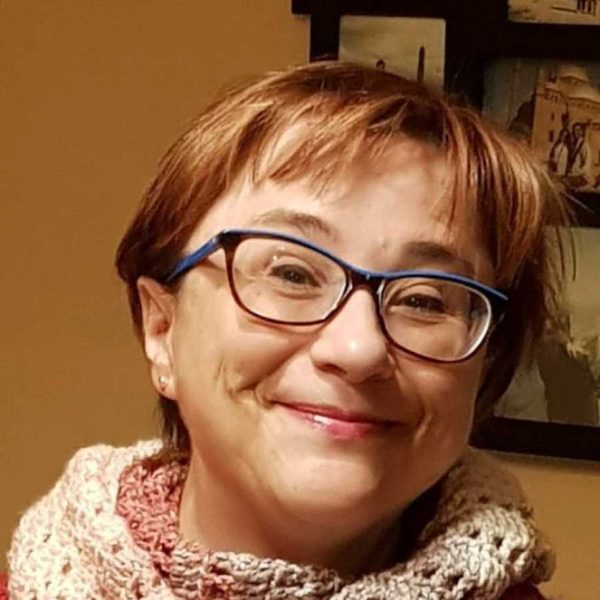
Cristina de Santiago Buey
Cristina de Santiago Buey holds a Ph.D. in Geological Sciences (UCM) and is Head of the Energy Resources Division at IGME-CSIC. She has been working in shallow geothermal energy since 2007, following more than twenty years of experience in geotechnical engineering at CEDEX, and focuses on the thermal characterization of the subsurface and technical regulations. She gives numerous public lectures at neighborhood associations, schools, and cultural centers (CSIC Lecture Catalog). She is the author of “What Do We Know About Geothermal Energy?” (Los Libros de la Catarata / CSIC, 2026).